Saturday, April 6, 2013

Friday, April 5, 2013
A TPRS Workshop in France! Don't miss it!
I'm reposting this because people were having trouble finding the original post.
There will be a TPRS workshop in Agen, France in August, 2013. As far as I know, this is the first TPRS workshop to be held in France.
I have been able to organize this opportunity for teachers in France with Teri Wiechart, who coaches at NTPRS. Alike Last from the Netherlands and Lynnette St George from Wheaton Academy near Chicago are in on the adventure too.
When?
August 6th – August 10th, 2013
Morning sessions 9:00 am – 12:00 am
Afternoon sessions 2:30 pm – 5:30 pm
Why?
Teachers of English as a foreign language in France or elsewhere will discover TPRS in sessions where they are taught a new language with the method and then they will learn to use it in training sessions with students.
This international workshop is also designed for teachers of French as a foreign language who wish to visit France while improving their teaching skills with TPRS. Teachers of other languages are welcome. Both beginners and advanced users of the method will benefit from being coached by our experienced staff.
Where?
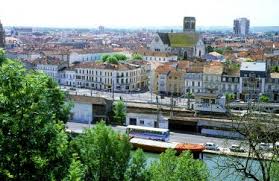
Agen lies in the Garonne valley in Southwest France at the heart of a rich agricultural area. You can get to Agen by high speed train (TGV). The trip takes about an hour from either Bordeaux or Toulouse and a little over four hours from Paris. The site of the workshop is within easy walking distance of the main shopping area, a dozen hotels and the train station. There is a free bus to get around the city center every twelve minutes.
Prices at downtown hotels range from 25 euros to 125 euros a night. You can get a decent meal for 12 euros in numerous excellent restaurants. For more information you can visit the Tourist Office site: http://www.ot-agen.org/
Who?
Teri Wiechart

Teri Wiechart worked as a French teacher at Delphos Jefferson High School from 1975 to 2010. Since then she has been working as a consultant to the Ohio Department of Education, working on updating the learning standards for Ohio’s K-12 students and implementing the new standards.
She has been a TPRS/CI trainer since 2001, working as a Presenter and Coach at the National TPRS Conference since 2007. She has also served as the coaching coordinator at the International Forum for Language Teachers, 2010, 2012, and 2013. Teri has a Masters of the Arts in Teaching and she studied abroad at l’Université de Strasbourg. She is currently President of the Ohio Foreign Language Association.
Lynnette St George


Lynnette St. George grew up in a French-American family in New England in a community infused with multi-cultural influences from France and Canada. Lynnette holds 2 Masters degrees, an MATL from Nova Southeastern University in Miami in Florida and an MA in French with a specialization in pedagogy and linguistics from L’école française of Middlebury College. She recently adapted the novel Le nouvel Houdini and its teacher's guide for TPRS publishing. Currently, Lynnette is the head of World Languages at Wheaton Academy, a Christian prep high school in the Chicago suburbs. Lynnette is a frequently requested speaker at professional conferences as well as a guest lecturer for University methods classes.
Alike Last
.JPG)
.JPG)
Alike Last lives in the Netherlands. She is a French teacher and organization psychologist. She introduced TPRS in the Netherlands in 2007 and organized several TPRS workshops for Blaine Ray and Susan Gross in the Netherlands. Alike Last initiated network meetings for Dutch and Belgian TPRS teachers who are interested in TPRS and she is co-founder of a Dutch platform for TPRS. Alike Last bases her French lessons on Multiple Intelligences and she teaches French with TPR and TPRS to adolescents at a Hotel school and in her own language institute she teaches French to adults. Alike Last is also a TPRS-teacher trainer and in 2012 she gave several workshops at the NTPRS in Las Vegas, one with Bryce Hedstrom, called: "The art and genius of going slowly".
Judy Dubois


Judith Logsdon-Dubois began teaching English to French speakers in 1967 as a Peace Corps Volunteer in Cameroon. Married to François Dubois, she moved to France in 1984 with their four children. She began teaching adult learners in 1986 and earned a Masters and then a DEA in English Literature and Civilization from the University of Bordeaux III. In 1991 she began teaching translation and American literature at the DEPAA, an antenna of the University of Bordeaux for future English teachers. In1995 she passed the French civil service exam for teachers and obtained the aggrégation in 1997. She taught at the Lycée Jean-Baptiste de Baudre in Agen from 1996 to 2012. She is a published author and since her retirement has been giving private lessons and travelling around France to talk about TPRS. She has led TPRS workshops in France and in Switzerland.
What?
The workshop program will be centered around experiencing the method, first as a student, learning Dutch from Alike Last in Fluency Fast sessions, then observing experienced teachers work with real students, and finally practicing with the same students while being coached. There will be sessions on classroom management, Embedded Reading, working with films, Krashen’s underlying theories, and French literature and culture. Considerable time will be spent in debriefing sessions, so that there will be more back and forth communication between the presenters and the participants than can be handled in larger programs. On Saturday afternoon, August 10th, there will be an optional walking tour of Agen.
We will help participants to find lodging if requested, but we cannot advance the cost of booking a hotel.
How Much?
For five days, morning and afternoon sessions, the price is 395 euros. We are deliberately keeping the price much lower than is usual for a five day workshop with such highly qualified presenters in order to encourage European teachers to discover TPRS. We are able to offer this exceptional price only because of the generosity of our workshop presenters who hope to see TPRS develop in Europe as it has in the United States.
Wednesday, April 3, 2013
Sage on a Stage?
The traditional style of transmitting knowledge was the professor who
lectured in front of awed disciples who copied his wisdom down in notes that were preserved religiously. It was
a style that preceded the invention of the printing press, the mimeograph, the
photocopier, the recording machine, videos, etc.,etc.
It was only in the last century that teachers began questioning the traditional
model, arguing that students should be more active, should be encouraged to
seek their own answers, find their own resources, that they should animate the
class while the teacher simply proposed questions and guided them to keep them
on the rails. All the manuals began to
talk about “student-centered” learning.
There were many slogans designed to promote the new style of learning. One of them was “Kill the teacher”. Another was “sage on the stage versus guide
on the side.” When I first heard these expressions I welcomed them as a breath
of fresh air, something that could empower students and make classes more
dynamic and interactive. There is no question in my mind that the lecturer
model of transmitting knowledge is the most ineffective way of teaching a
foreign language known to man.
Some observers of a TPRS class notice that the teacher talks throughout
much of the class. So they come to the
superficial judgment that the teacher is being too directive, monopolizing the
discourse and following the medieval tradition of “sage on a stage”.
I would ask such observers to look again. Throughout a TPRS class we are constantly
interacting with students. We are not spouting wisdom but asking them
questions about themselves, something they know a lot about. They are the
experts. They are the subject of the class. If TPRS teachers were to simply
speak in the target language without the constant interaction that comes from
PQA and circling, they would soon lose their "audience". On the
contrary, students are fully engaged during a TPRS lesson, engaged in a
conversation with the teacher about themselves, a conversation which uses their
input to build a story. We are modeling the language, but giving them every
opportunity to express themselves as much as they can.
I think dancing partner would be a better description of what we do.
The better dancer “leads” so that their partner can follow. It’s the
interaction that is magic. The best way
to learn to waltz is to have a partner that knows what they're doing.
Monday, April 1, 2013
"Dang"
“I enjoy the kids. I throw a nerf football around with them between classes and sometimes in class. We try to laugh during our brain breaks. ... We can never lighten up enough on our kids. ... All my years of teaching, and I am only finding this out at the end. All these years, I thought it was all so serious. Dang.” __ Ben Slavic
Last week I went into one of Emilie’s classes in order to be her model for the Class competitions. Tuesday we did PQA and Friday we did a story. She did the same thing in the next class. And as I stood in front of those kids who had their names written on cards because I didn’t know them, I realized that I really missed being in a classroom, standing in front of twenty some kids.
This year I’ve been giving private lessons and there are six in my largest group, so it’s not at all the same thing. My private students are very motivated and pleasant, but there’s not the same tension as there is in a “real” classroom. It’s a bit like walking a tightrope, trying to keep them engaged and yet rigorous, reeling in the loose minds that start to stray without them being too aware that you’re reeling them in, knowing there’s no net below you.
Then there are those magic moments when you make a connection and see eyes light up and there's genuine laughter, laughter that can be shared, laughter that harms no one. That's how I got my highs.
So, yes. Dang.
Sunday, March 31, 2013
Christmas in August!
This is the last day on which you can register for the TPRS workshop in Agen, France and get the early bird price. Since the Paypal button is not yet working, I've extended the deadline for anyone who sends me an e-mail stating that they intend to send the 295 euros by bank transfer during the coming week.
I'm very happy about the participants who have already registered. We have some quality names, people who I know through their posts on the moretprs forum and that I'm looking forward to meeting. It's a delightfully international group, with teachers coming from Spain, France, Great Britain, Germany, Canada and the US. I'm so looking forward to working with them and Teri, Lynnette and Alike. It's going to be like waiting for Santa Claus.
I'm very happy about the participants who have already registered. We have some quality names, people who I know through their posts on the moretprs forum and that I'm looking forward to meeting. It's a delightfully international group, with teachers coming from Spain, France, Great Britain, Germany, Canada and the US. I'm so looking forward to working with them and Teri, Lynnette and Alike. It's going to be like waiting for Santa Claus.
Sunday, March 24, 2013
TESOL Toulouse
I got up at four o'clock Saturday morning so I could drive to Nérac to pick up my friend Glenda and then to Agen where we took the 7:20 am train to Toulouse. There we discovered the brand new Metro, at least for me, and made our way to a former tobacco factory. It sounds industrial but looked stylish and kind of Art Nouveau, obviously enjoying a new lease on life. There were signs up for karate classes and arrows pointing to "anniversaire Siad". We spotted the handwritten signs that said "TESOL" and followed them.
On the second floor, in a large, airy room we found about twenty other people dedicated to teaching the French to speak English. We got there at 9:30, a little late for the coffee and pastries, but in time for the first presentation. I had time to say hello to Kate Kleinsworth, whom I had met at the national TESOL conference in Paris in November. She had given an interesting presentation of what she called "Dialogue Journals". I found her idea very similar to what I have always called fluency writing, but Kate takes it a step further by writing short notes to her students, not correcting their grammar but responding to their content, so that it becomes a dialogue between the teacher and the student.
The first talk was "Differentiated Instruction" by Richard Pearson. It was interesting and so well-structured that I found I could take notes that actually made sense when I looked at them afterwards. Richard explained how to introduce choice into all three steps of conceiving a lesson. Students can be allowed to choose a topic, choose how to process that topic and what form their final production will take. Of course it was more complex than that, but he did make it seem doable and we all know how important it is to introduce choice into our courses so that students feel empowered.
Then Dan Kelly spoke about using humor to teach English and had an interesting approach and a lively delivery. His lesson was funny, but I've found in the past that a pun loses all its humor when you spend twenty minutes explaining why it's funny. Still, Dan had an interesting video to use to make students aware that one word can have several different meanings and we all signed up when he offered to send his lesson to us.
After a short break Ros Wright spoke about writing materials for ESP, English for Specific Purposes. Two of my private students are professionals who need English for their work, so I was all ears. The abstract promised that she would provide "a simple but adaptable framework to help you design your own ESP materials" and she kept her word. It was an excellent presentation, well worth getting up early, driving in the dark and catching a train to hear.
My only regret was that I didn't get more of an opportunity to chat with all the fascinating people in the room. They were of all ages, Brits, Americans and at least one New Zealander. My novelist instincts were on red alert, but I'm shy about approaching people I don't know, afraid I'll be seen as intruding. My friend Glenda is better at socializing and she had an animated conversation with a woman who works with special needs children.
It was a very pleasant, professionally stimulating morning and I'll be sure to go the next time I get a message from Kate about TESOL Toulouse. Glenda thanked me more than once for suggesting that she accompany me.
Sunday, March 17, 2013
A TPRS Witch
When I present
TPRS I feel a little bit like the witch in Hansel and Gretel. She has this house made out of goodies, candy
and sweets and the children start nibbling and it’s really good stuff and
before they know it she has them.
Except I’m a
good witch, not a wicked witch. I don’t
eat the children that come nibbling at my shutters. I don’t make prisoners of them. But the funny thing is that once they’ve come
into the house and visited all the corners and met the great people who live
there, they fall victim to the spell of TPRS and never want to leave.
The candy and
goodies that the TPRS house is made of are techniques that any teacher, using
any method, can use. PQA is a fantastic
way to present new vocabulary by personalizing it so students retain it. Circling is a great way to get in the
repetitions that students need. Asking a story with your students gets them
engaged and interested and gives them a structure that is easy to remember. Embedded
Readings allow weak students to find their sea legs and progress. Pop-ups make
grammar relevant and digestible. Teaching to the eyes, barometer students,
pause and point, interactive communication rubrics, fluency writing, these are
all techniques used by TPRS teachers that other teachers can put in their tool
kits. These are the goodies.
Stephen
Krashen is the wizard that casts a spell on them and retains those innocent
seekers of innovation and effective new tools in the house of Comprehensible
Input. Because once you’ve tasted the
TPRS candies and seen how they work with your students, you start craving more
and wondering why they work so well. And
you start weeding out less effective techniques that use up the limited time you have with your students. And Krashen, gently, respectfully, suggests
why some strategies work and some don’t. And one day you realize that you are
judging every class activity by the standard of comprehensible input, that you
have tossed out of your toolkit everything that does not furnish your students
with comprehensible input. Gotcha!
Wednesday, March 13, 2013
A TPRS way to do error correction
Some time ago I woke up and realized that all those red pens had done next to nothing in helping my students "correct" their mistakes. I had spent hours and hours and hours hunched over the table, painstakingly trying to understand what they were trying to say, conscientiously trying to be sure that I didn't "miss" any misspellings, wrong tenses, wrong word order, etc., etc., etc. All for nothing beyond giving my students and their parents the impression I was doing my job. Let's be honest. How many students actually read your comments and careful explanations? How many simply look at the grade and toss the paper? And if there are a few who do try to "learn from their mistakes", do they really benefit from being told how wrong they are?
Krashen says no. Kohn says no. There are very serious studies out there that prove that corrections are at best neutral, and often have a negative influence because they raise the affective filter. And common sense tells us that the best way to produce a stutterer is to correct a baby every time it opens its mouth. Yet that's what we tend to do to our students. We destroy their confidence, not to mention their pleasure, by constantly telling them they are wrong. Although I speak and write French well enough to have passed the French Agrégation, I still make occasional errors (mainly in gender agreement). And I will admit that when I am in a serious discussion and someone corrects something I said, it annoys me. It annoys me because to me it means they are more interested in my grammar than in the subject we were discussing, that to them form is more important than content.
Currently I work with adult students who learned English the traditional way, yet did not acquire it, since they feel the need for lessons and have little confidence in their ability to speak the language. They want to write texts and be corrected. I want them to listen and read simple texts in correct English. I recently found a way to make everyone happy.
We created in class a story about one of the women who went shopping in Paris. It was based on another of Anne Matava's stories, "Try it on." At the end of the lesson I suggested that they write up the story at home and send it to me by e-mail.
To be honest, I didn't expect to get many and thought that I would have one or two on which to base a simple reading for the next class. Well, they are a motivated group and get along well and communicate with each other, so I actually received six versions of the story from seven students. I copy- pasted them into a document and corrected the mistakes. That is, I edited them, so there were no mistakes in the final version. I also added a little vocabulary for some that I think are ready for more advanced structures. I printed the six little stories on two sheets of papers without giving the names. At our next meeting I simply handed out the papers so that everyone had three stories to read.
Now what do we look for in reading material in TPRS? Compelling input with repetition of our target structures, right? Well, my students had three versions of the same story to read. Was it compelling? Absolutely! They read to recognize their own story, they read to see what I had changed and they read to see what their friends had written and what was different.
I told them that if they had any questions about the changes I had made, to ask me. I did not give a lecture on "frequent mistakes". My reasoning was that if they were not ready to recognize their own mistakes, they had not yet reached i+1, and lectures were wasted breath. One man asked me about a conditional structure. It's obviously emergeant for him, and I will include examples of the same structure in our lesson next week. Instead of humiliating them by returning papers heavily marked with red, I gave them a text they could be proud of and share and compare with their friends. My goal was to have them read three versions of the story, but they were so engrossed that they spontaneously exchanged papers and read all six versions. I asked them to write another version for next week by combining the best elements of the three stories they have. Can you see my Chesire cat smile? They're going to be reading and rereading the stories once more, and then we'll have another text for next week. I have no doubt that by then the target structures (try it on - I like it - they don't fit) will be acquired.
Krashen says no. Kohn says no. There are very serious studies out there that prove that corrections are at best neutral, and often have a negative influence because they raise the affective filter. And common sense tells us that the best way to produce a stutterer is to correct a baby every time it opens its mouth. Yet that's what we tend to do to our students. We destroy their confidence, not to mention their pleasure, by constantly telling them they are wrong. Although I speak and write French well enough to have passed the French Agrégation, I still make occasional errors (mainly in gender agreement). And I will admit that when I am in a serious discussion and someone corrects something I said, it annoys me. It annoys me because to me it means they are more interested in my grammar than in the subject we were discussing, that to them form is more important than content.
Currently I work with adult students who learned English the traditional way, yet did not acquire it, since they feel the need for lessons and have little confidence in their ability to speak the language. They want to write texts and be corrected. I want them to listen and read simple texts in correct English. I recently found a way to make everyone happy.
We created in class a story about one of the women who went shopping in Paris. It was based on another of Anne Matava's stories, "Try it on." At the end of the lesson I suggested that they write up the story at home and send it to me by e-mail.
To be honest, I didn't expect to get many and thought that I would have one or two on which to base a simple reading for the next class. Well, they are a motivated group and get along well and communicate with each other, so I actually received six versions of the story from seven students. I copy- pasted them into a document and corrected the mistakes. That is, I edited them, so there were no mistakes in the final version. I also added a little vocabulary for some that I think are ready for more advanced structures. I printed the six little stories on two sheets of papers without giving the names. At our next meeting I simply handed out the papers so that everyone had three stories to read.
Now what do we look for in reading material in TPRS? Compelling input with repetition of our target structures, right? Well, my students had three versions of the same story to read. Was it compelling? Absolutely! They read to recognize their own story, they read to see what I had changed and they read to see what their friends had written and what was different.
I told them that if they had any questions about the changes I had made, to ask me. I did not give a lecture on "frequent mistakes". My reasoning was that if they were not ready to recognize their own mistakes, they had not yet reached i+1, and lectures were wasted breath. One man asked me about a conditional structure. It's obviously emergeant for him, and I will include examples of the same structure in our lesson next week. Instead of humiliating them by returning papers heavily marked with red, I gave them a text they could be proud of and share and compare with their friends. My goal was to have them read three versions of the story, but they were so engrossed that they spontaneously exchanged papers and read all six versions. I asked them to write another version for next week by combining the best elements of the three stories they have. Can you see my Chesire cat smile? They're going to be reading and rereading the stories once more, and then we'll have another text for next week. I have no doubt that by then the target structures (try it on - I like it - they don't fit) will be acquired.
Sunday, March 10, 2013
How to Get the Early Bird Price
If you want to enroll for the TPRS Workshop that will be held in Agen, France in August, you may have noticed that the Paypal button is not yet activated. It is taking longer than I thought. If you want to pay before March 31st, in order to benefit from the Early Bird price of 295 euros, simply send me an e-mail judyldubois@aol.com and I will send you the bank information so you can transfer the amount through your bank. This usually takes only 24 hours and the fees are low.
After March 31st, enrollment in the workshop will cost 395 euros.
I'll be sending out registration forms to everyone who has contacted me about the workshop. If you have any questions, don't hesitate to post them on the blog. Some people have asked if the workshop would suit those who teach other languages than English and French. All languages are welcome, since TPRS can be used to teach any language.
After March 31st, enrollment in the workshop will cost 395 euros.
I'll be sending out registration forms to everyone who has contacted me about the workshop. If you have any questions, don't hesitate to post them on the blog. Some people have asked if the workshop would suit those who teach other languages than English and French. All languages are welcome, since TPRS can be used to teach any language.
Monday, March 4, 2013
Krashen Rocks!
Stephen Krashen published Second Language Acquisition and Second Language Learning in 1981. In this influential book he made the distinction between acquisition and learning which explains why so many students in France study English in school for seven years and are still unable to communicate in English. They learned the grammar; they memorized irregular verbs; they decoded literary passages. They can not tell a tourist how to find the nearest post office. They learned about the language. They did not acquire it.
My francophone granddaughter, having chosen to study Spanish in school, spent a month in the United States, listening in on conversations and watching Pirates of the Caribbean and High School Musical in English with English subtitles. Six months later, confronted with two Americans who spoke no French, she spoke to them in beautifully accented English, making very few grammatical errors. She had acquired English without learning it. This may be anecdotal, but it is one of the many reasons why Krashen's hypotheses make sense to me. They are validated by my own personal experience, which includes forty years of teaching English as a foreign language.
Krashen set out to discover how languages are acquired. He based his conclusions on earlier studies as well as his own research and has never claimed to have invented any methodology. In a nut shell, Krashen affirms that we acquire languages through comprehensible input, that is, through hearing and reading messages that we understand. This is how mothers teach their children to speak; this is how people like my grandaughter acquire language in an immersion experience. After hearing a message that is comprehensible because of its context, we acquire that bit of language and are eventually able to produce it and be understood. We have all watched children acquire language in this manner. Krashen's work inspired Teller to develop "The Natural Approach". James Asher applied Krashen's hypothesis and came up with what is known as TPR, Total Physical Response.
(A teacher using TPR gives commands to her students. Stand up. Sit down. Turn around. As she gives the commands she models them so the students understand what she wants. After several repetitions she stops modelling and the students respond with the physical action she is asking for. She is giving them comprehensible input and their actions demonstrate that they are understanding her. The fact that they are not required to speak but to demonstrate through their actions that they have understood gives the method its name. Berty Segal is the world's champion TPR teacher. )
Other teachers tried to apply Krashen's hypotheses to teaching a foreign language in a classroom environment. It wasn't an easy task, since in a classroom over a period of several years students receive only a few hundred hours of input, instead of the thousands of hours they receive in an immersion experience. The solution, rather obviously, was not to waste those few hours, packing them with 100% comprehensible input, whereas in immersion much of the input is incomprehensible "noise". One of the teachers exploring the possibilities of comprehensible input was Blaine Ray. He began using TPR to teach Spanish and developed the art of creating stories with his students. Susie Gross, Jason Fritze and many, many others became interested in his TPR-storytelling and helped it evolve into TPRS as it stands today. Although everyone recognizes Blaine Ray's genius, the method would not be as complete and solid as it is without the input of literally thousands of teachers who tried it and discussed their experiments, successes and failures, on the moretprs forum.
Although no one has ever disproved Krashen's hypotheses, it has become fashionable in the world of teaching foreign languages to hint that he's a bit old-fashioned or to disparage his work. The current fashion is to get students to produce, to speak, to do wonderful, dazzling projects, etc. Any output by students is nirvana and teachers who furnish input are suffering from a severe case of ego-mania. "Kill the teacher" has become the buzz word. At a recent international conference for teachers of English as a foreign language, I heard a speaker refer to comprehensible input as "the talk until you drop" school.
I was puzzled by such an attitude, puzzled that professionals have been so quick to discount Krashen without the benefit of any scientific research. Why go to the trouble of doing a complex study when a sneer can do the job? I tried to find out what arguments Krashen's opponents used to discredit him. Just as I have stated that his hypotheses have never been disproven, others point out that they have never been proved. Which is why they are called hypotheses. It is very difficult to construct studies which take into account all the myriad factors involved in learning a language. However, there is a growing body of studies which show that methods using comprehensible input have more long lasting results than other methods. Basically, when students acquire a language through comprehensible input, they are able to demonstrate acquisition many months later, whereas students who learn a language through conscious study, memorization, grammar exercises, etc., do not retain it.
I was puzzled by the negative attitude of so many professionals because my first timid experiments with TPRS immediately paid off and I could see my students progressing as never before. Why were my colleagues so reluctant to try it?
We could simply say that they lacked the courage to try something new and different, or that they were lazy. But I recently read an interesting article by Tyler Valiquette in which he says, "People’s behaviors are based on attitudes, beliefs, and values and (...) changes in behavior rely on changes in these underlying attributes." http://news.yourolivebranch.org/2013/03/04/what-do-you-have-in-common-with-a-low-income-indian-mother-more-than-you-think/
Attitudes, beliefs and values. My colleagues succeeded in the incredibly selective French school system because they conformed to what was expected of them. Can we say that most of them have a conformist attitude? They learned English with traditional teachers and over time acquired a highly competent level. I can honestly say that most of them speak English better than I speak French. They have every reason to believe that traditional methods are effective with hard-working, motivated students. They value hard work and motivation in students, because that's the kind of student they were. Can we blame them if they are not trying to invent new methodologies?
The problem with Krashen is that if you take him seriously you are forced to discard almost everything we think we know about Learning a Foreign Language. The first thing a TPRS teacher does is discard the textbook. Her students make their own, personalized stories which are far more interesting than those in the book. Surprisingly, textbook manufacturers seem to prefer to pretend that there's no such thing as TPRS. Then she throws out the workbooks and grammar exercises, because explicit grammar instruction is 1) a waste of precious time 2) ineffective 3) extremely boring. If you follow Krashen, you realize that correcting errors is an enormous waste of time and effort and frequently (always?) is responsible for raising the affective filter, making acquisition more difficult, if not impossible. If all teachers believed him, the market for red pens would be gutted. Pre-TPRS I was very proud of my explanations of grammatical structures. I had diagrams and visual supports that my colleagues begged to borrow. Today they're rotting at the bottom of a trunk. I have an even more scandalous confession to make. I no longer give my students quizzes on the irregular verbs. I don't have to. They have acquired the high frequency verbs that turn up constantly in our stories. And when they need the others, they'll acquire them too.
All in all, when you consider what teachers must give up and abandon if they follow Krashen, it's not at all suprising that so many prefer to turn a blind eye and a deaf ear to his hypotheses. Over the years, as I've come to know the TPRS community, what has constantly struck me is the number of converts who were successful, highly respected teachers with many years of practice before they changed their methods. Perhaps it is easier for such teachers to have the confidence and experience needed to go through such an earth shaking change. Younger, less confident teachers are more easily intimidated.
I am not a researcher. I am a teacher. Everything I have read by Krashen corresponds to my personal experience in the classroom. Thanks to Krashen I now understand why students who had passed my test on the passive voice with flying colors could not use it correctly a month later. I had the impression that once the test was behind them, they wiped their minds clean, ready to start over again. Krashen explains that what is learned goes into the short term memory. After I discovered TPRS I heard my students using the passive voice correctly, spontaneously, without any idea of what "passive voice" means. And able to answer the same questions a year later. Acquisition goes into the long term memory.
If I had any doubts about Krashen, his position on the natural order of acquisition would settle them. In my opinion it is the only explanation of the the "third person singular paradox." In France students are taught in their very first year of English that the third person singular verb in the present tense takes -s. During their seven years of English lessons the rule is constantly reviewed and they are penalized every time they forget it. Ask them why there is an -s on "he plays" and they will tell you that it's the "troisième personne du singulier." It is safer not to ask them what "troisième personne du singulier" means, because not many of them could tell you that, but they can all recite the rule. Yet only exceptional students at an advanced level actually pronounce the -s on third person singular verbs. I would estimate that almost half of them forget to write it, even on important exams when they have time to carefully edit what they have written. If consciously learning a grammar rule and practicing it for many years was an effective method, why do they have so many problems with this simple rule, which they have learned but do not apply? Krashen explains that the third person singular does not affect meaning and is therefore late acquired in the natural order of acquisition. Duh. His explanation makes a lot more sense to me than deciding that students are lazy or stupid.
I began following the moretprs forum in 2006. A few years later Krashen himself began posting on the forum, answering questions and giving his opinion. When teachers are confronted with administrations that expect to see verb charts and student output, he furnishes them with documents and studies that support the method. When teachers start worrying about "covering" the syllabus, focusing on pronouns, when to introduce the past tense, etc., he is there to remind them that the essential task is to help our students acquire a language. While his former attitude toward TPRS seemed diplomatically neutral, he has now taken the position that it is the most efficient method he has been able to observe. On the forum, he constantly encourages teachers to put their trust in comprehensible input and to use their precious few hours of class time wisely.
He has recently given us an advance view of an article that will be published in the International Journal of Foreign Language Teaching. It develops his Net hypothesis and urges teachers to stop targeting specific language structures. If input is compelling, students will acquire everything they are ready to acquire.
He says, "I suggest we consider loosening up class discussions and in-class stories. The focus in TPRS has been making input 100% comprehensible, with students being able to understand, and translate, every word (Ray and Seeley, 2008). Some beginners, because of bad experiences in other classes, might require fully transparent input at first, but it might be more efficient, and easier, to gradually relax the transparency constraint and insist only that the input appear to be fully comprehensible. I am suggesting that it is ok, and even desirable, that the input contain a small amount of “noise,” or i+n.
My interpretation of this is that we should be spending more time and effort at making our input compelling and engaging our students, and less worrying about whether or not we've frontloaded all the necessary vocabulary.
What a great message! Our role is to engage our students, to communicate with them about things that interest them, to interact with them as we would with any other person, and the language will take care of itself. Isn't that wonderful? It gives me a feeling of freedom and wide open spaces. I've always enjoyed being a teacher, seeing young faces light up when they "get it." Thanks to Krashen I now feel like a rider who has been given permission to leave the limits of the arena and to push on into open trails, heading for the horizon.
My francophone granddaughter, having chosen to study Spanish in school, spent a month in the United States, listening in on conversations and watching Pirates of the Caribbean and High School Musical in English with English subtitles. Six months later, confronted with two Americans who spoke no French, she spoke to them in beautifully accented English, making very few grammatical errors. She had acquired English without learning it. This may be anecdotal, but it is one of the many reasons why Krashen's hypotheses make sense to me. They are validated by my own personal experience, which includes forty years of teaching English as a foreign language.
Krashen set out to discover how languages are acquired. He based his conclusions on earlier studies as well as his own research and has never claimed to have invented any methodology. In a nut shell, Krashen affirms that we acquire languages through comprehensible input, that is, through hearing and reading messages that we understand. This is how mothers teach their children to speak; this is how people like my grandaughter acquire language in an immersion experience. After hearing a message that is comprehensible because of its context, we acquire that bit of language and are eventually able to produce it and be understood. We have all watched children acquire language in this manner. Krashen's work inspired Teller to develop "The Natural Approach". James Asher applied Krashen's hypothesis and came up with what is known as TPR, Total Physical Response.
(A teacher using TPR gives commands to her students. Stand up. Sit down. Turn around. As she gives the commands she models them so the students understand what she wants. After several repetitions she stops modelling and the students respond with the physical action she is asking for. She is giving them comprehensible input and their actions demonstrate that they are understanding her. The fact that they are not required to speak but to demonstrate through their actions that they have understood gives the method its name. Berty Segal is the world's champion TPR teacher. )
Other teachers tried to apply Krashen's hypotheses to teaching a foreign language in a classroom environment. It wasn't an easy task, since in a classroom over a period of several years students receive only a few hundred hours of input, instead of the thousands of hours they receive in an immersion experience. The solution, rather obviously, was not to waste those few hours, packing them with 100% comprehensible input, whereas in immersion much of the input is incomprehensible "noise". One of the teachers exploring the possibilities of comprehensible input was Blaine Ray. He began using TPR to teach Spanish and developed the art of creating stories with his students. Susie Gross, Jason Fritze and many, many others became interested in his TPR-storytelling and helped it evolve into TPRS as it stands today. Although everyone recognizes Blaine Ray's genius, the method would not be as complete and solid as it is without the input of literally thousands of teachers who tried it and discussed their experiments, successes and failures, on the moretprs forum.
Although no one has ever disproved Krashen's hypotheses, it has become fashionable in the world of teaching foreign languages to hint that he's a bit old-fashioned or to disparage his work. The current fashion is to get students to produce, to speak, to do wonderful, dazzling projects, etc. Any output by students is nirvana and teachers who furnish input are suffering from a severe case of ego-mania. "Kill the teacher" has become the buzz word. At a recent international conference for teachers of English as a foreign language, I heard a speaker refer to comprehensible input as "the talk until you drop" school.
I was puzzled by such an attitude, puzzled that professionals have been so quick to discount Krashen without the benefit of any scientific research. Why go to the trouble of doing a complex study when a sneer can do the job? I tried to find out what arguments Krashen's opponents used to discredit him. Just as I have stated that his hypotheses have never been disproven, others point out that they have never been proved. Which is why they are called hypotheses. It is very difficult to construct studies which take into account all the myriad factors involved in learning a language. However, there is a growing body of studies which show that methods using comprehensible input have more long lasting results than other methods. Basically, when students acquire a language through comprehensible input, they are able to demonstrate acquisition many months later, whereas students who learn a language through conscious study, memorization, grammar exercises, etc., do not retain it.
I was puzzled by the negative attitude of so many professionals because my first timid experiments with TPRS immediately paid off and I could see my students progressing as never before. Why were my colleagues so reluctant to try it?
We could simply say that they lacked the courage to try something new and different, or that they were lazy. But I recently read an interesting article by Tyler Valiquette in which he says, "People’s behaviors are based on attitudes, beliefs, and values and (...) changes in behavior rely on changes in these underlying attributes." http://news.yourolivebranch.org/2013/03/04/what-do-you-have-in-common-with-a-low-income-indian-mother-more-than-you-think/
Attitudes, beliefs and values. My colleagues succeeded in the incredibly selective French school system because they conformed to what was expected of them. Can we say that most of them have a conformist attitude? They learned English with traditional teachers and over time acquired a highly competent level. I can honestly say that most of them speak English better than I speak French. They have every reason to believe that traditional methods are effective with hard-working, motivated students. They value hard work and motivation in students, because that's the kind of student they were. Can we blame them if they are not trying to invent new methodologies?
The problem with Krashen is that if you take him seriously you are forced to discard almost everything we think we know about Learning a Foreign Language. The first thing a TPRS teacher does is discard the textbook. Her students make their own, personalized stories which are far more interesting than those in the book. Surprisingly, textbook manufacturers seem to prefer to pretend that there's no such thing as TPRS. Then she throws out the workbooks and grammar exercises, because explicit grammar instruction is 1) a waste of precious time 2) ineffective 3) extremely boring. If you follow Krashen, you realize that correcting errors is an enormous waste of time and effort and frequently (always?) is responsible for raising the affective filter, making acquisition more difficult, if not impossible. If all teachers believed him, the market for red pens would be gutted. Pre-TPRS I was very proud of my explanations of grammatical structures. I had diagrams and visual supports that my colleagues begged to borrow. Today they're rotting at the bottom of a trunk. I have an even more scandalous confession to make. I no longer give my students quizzes on the irregular verbs. I don't have to. They have acquired the high frequency verbs that turn up constantly in our stories. And when they need the others, they'll acquire them too.
All in all, when you consider what teachers must give up and abandon if they follow Krashen, it's not at all suprising that so many prefer to turn a blind eye and a deaf ear to his hypotheses. Over the years, as I've come to know the TPRS community, what has constantly struck me is the number of converts who were successful, highly respected teachers with many years of practice before they changed their methods. Perhaps it is easier for such teachers to have the confidence and experience needed to go through such an earth shaking change. Younger, less confident teachers are more easily intimidated.
I am not a researcher. I am a teacher. Everything I have read by Krashen corresponds to my personal experience in the classroom. Thanks to Krashen I now understand why students who had passed my test on the passive voice with flying colors could not use it correctly a month later. I had the impression that once the test was behind them, they wiped their minds clean, ready to start over again. Krashen explains that what is learned goes into the short term memory. After I discovered TPRS I heard my students using the passive voice correctly, spontaneously, without any idea of what "passive voice" means. And able to answer the same questions a year later. Acquisition goes into the long term memory.
If I had any doubts about Krashen, his position on the natural order of acquisition would settle them. In my opinion it is the only explanation of the the "third person singular paradox." In France students are taught in their very first year of English that the third person singular verb in the present tense takes -s. During their seven years of English lessons the rule is constantly reviewed and they are penalized every time they forget it. Ask them why there is an -s on "he plays" and they will tell you that it's the "troisième personne du singulier." It is safer not to ask them what "troisième personne du singulier" means, because not many of them could tell you that, but they can all recite the rule. Yet only exceptional students at an advanced level actually pronounce the -s on third person singular verbs. I would estimate that almost half of them forget to write it, even on important exams when they have time to carefully edit what they have written. If consciously learning a grammar rule and practicing it for many years was an effective method, why do they have so many problems with this simple rule, which they have learned but do not apply? Krashen explains that the third person singular does not affect meaning and is therefore late acquired in the natural order of acquisition. Duh. His explanation makes a lot more sense to me than deciding that students are lazy or stupid.
I began following the moretprs forum in 2006. A few years later Krashen himself began posting on the forum, answering questions and giving his opinion. When teachers are confronted with administrations that expect to see verb charts and student output, he furnishes them with documents and studies that support the method. When teachers start worrying about "covering" the syllabus, focusing on pronouns, when to introduce the past tense, etc., he is there to remind them that the essential task is to help our students acquire a language. While his former attitude toward TPRS seemed diplomatically neutral, he has now taken the position that it is the most efficient method he has been able to observe. On the forum, he constantly encourages teachers to put their trust in comprehensible input and to use their precious few hours of class time wisely.
He has recently given us an advance view of an article that will be published in the International Journal of Foreign Language Teaching. It develops his Net hypothesis and urges teachers to stop targeting specific language structures. If input is compelling, students will acquire everything they are ready to acquire.
He says, "I suggest we consider loosening up class discussions and in-class stories. The focus in TPRS has been making input 100% comprehensible, with students being able to understand, and translate, every word (Ray and Seeley, 2008). Some beginners, because of bad experiences in other classes, might require fully transparent input at first, but it might be more efficient, and easier, to gradually relax the transparency constraint and insist only that the input appear to be fully comprehensible. I am suggesting that it is ok, and even desirable, that the input contain a small amount of “noise,” or i+n.
My interpretation of this is that we should be spending more time and effort at making our input compelling and engaging our students, and less worrying about whether or not we've frontloaded all the necessary vocabulary.
What a great message! Our role is to engage our students, to communicate with them about things that interest them, to interact with them as we would with any other person, and the language will take care of itself. Isn't that wonderful? It gives me a feeling of freedom and wide open spaces. I've always enjoyed being a teacher, seeing young faces light up when they "get it." Thanks to Krashen I now feel like a rider who has been given permission to leave the limits of the arena and to push on into open trails, heading for the horizon.
Sunday, February 24, 2013
Zen and TPRS
Greg is a young teacher who first heard about TPRS last week and has decided to start using it in his classes Monday ... tomorrow. That's a remarkable decision and a very brave one. He's got one of the best tutors in the world in Ben Slavic who is guiding him through the transition. In his case, as Ben says, it's more like a high dive, but he's probably right. The sooner you shake off your doubts and hesitations and dive right in, the easier it will be.
Greg was worried about lesson plans. He has 90 minute classes and is used to having them programmed. Ben pointed out several routines that other TPRS teachers use and which are posted on his site. I can remember my first training session after having passed the CAPES in France which made of me a "real" language teacher employed by the ministry of Education. (In the States you train and when you are certified, you look for a job. In France you get the job first and then they train you.) We were given a lesson plan template:
When we were inspected, the inspectors expected to see this basic plan (with a few brilliant innovations if possible). Our students expected to see it too, since that is how they were used to being taught. If you didn't follow it, your lessons "were not structured". Parents and inspectors checked students' notebooks for the trace écrit and used it to judge what was happening in your classroom. And if you didn't manage to jump all the hoops within the allotted time, you had pacing problems.
When I realized that TPRS allowed me to throw that kind of lesson plan out the window, it was a breath of bracing sea air, tasting of freedom and open spaces. I now go into classes with little more than three structures in my mind.
Greg was worried about lesson plans. He has 90 minute classes and is used to having them programmed. Ben pointed out several routines that other TPRS teachers use and which are posted on his site. I can remember my first training session after having passed the CAPES in France which made of me a "real" language teacher employed by the ministry of Education. (In the States you train and when you are certified, you look for a job. In France you get the job first and then they train you.) We were given a lesson plan template:
- 5 minutes warm-up
- ten minutes revision
- ten minutes presentation of new material
- 15 minutes application
- 10 minutes reading a text
- 5 minutes discussion
- 5 minutes summary + trace écrit ( an elegant way of saying copy into your notebooks what is written on the board)
When we were inspected, the inspectors expected to see this basic plan (with a few brilliant innovations if possible). Our students expected to see it too, since that is how they were used to being taught. If you didn't follow it, your lessons "were not structured". Parents and inspectors checked students' notebooks for the trace écrit and used it to judge what was happening in your classroom. And if you didn't manage to jump all the hoops within the allotted time, you had pacing problems.
When I realized that TPRS allowed me to throw that kind of lesson plan out the window, it was a breath of bracing sea air, tasting of freedom and open spaces. I now go into classes with little more than three structures in my mind.
Hears something - is afraid - runs away*
I start chatting, asking my students if they had a good week, what they did, where they went. Why it was good or bad. Then I hush them and ask if they hear anything. What do they hear? When they are at home at night, do they hear anything? These questions in English allow me to work on something/anything/nothing, always a good idea, and to learn a little more about my students. We're doing PQA according to the plan, but I'm actually just having a relaxed conversation with my students. Talking about what they hear at night gets us into what they are afraid of. Spiders and snakes, etc. I tell them that I've lived in Africa and I'm not afraid of spiders and snakes and rats, etc., but I'm terrified if I see a little mouse. I run away. What do they do?
When they seem to have nothing more to say, or I can think of nothing more to ask them, I announce that we are going to "make" a story. Since they are starting to understand how the game works, they grin and look at each other. I understand this to mean that they are ready to play, eager to come up with fun ideas. I ask who the story is going to be about, we spend a little time inventing our hero and learning more about them, then I start asking the questions that build the story. They make suggestions and I accept or refuse as it suits where I think the story may go.
If the story becomes complex and we run out of time, we'll continue it next time. Or not, depending on how interesting it seems. If there's a resolution and we still have time, I can ask for retells. Or, as I did yesterday, give them their story as a dictation. I asked a question, got an answer that starts the story, repeated it and asked them to write it down as a dictation. Then I wrote it on the board so they could see if they had it right. We had enough time to go through the entire story, though as we progressed I stopped asking questions, just gave them the next line as a dictation. They really seemed to enjoy doing this, made very few mistakes and self-corrected almost without any help or explanations from me. It did allow me to make a few pointers. And we have the story all written down for a reading.
My point, as I explained to Greg, is that in TPRS the important thing is the journey and not where you end up. As long as you are speaking in the target language and your students are engaged and understanding everything you say, they are acquiring the language. So it doesn't really matter how far you get with your lesson plan. What matters is how much they acquired along the way. "The journey matters more than the destination."
* Thanks to Anne Matava for her Story Scripts
* Thanks to Anne Matava for her Story Scripts
Monday, February 18, 2013
In the Ghetto .... my old standby
The first time I taught this song I was merely looking for a good example of the simple present tense in English. Which it is, since it contains examples of all the uses of the simple present tense and there is no other tense used in the lyrics. Since it went over well, I used it again and again, with an explanation of the simple present tense and asking the students to find the examples in the song. This was before I had learned about TPRS.
Then one day as we were listening to the song, it suddenly hit me, who the child born in the last stanza was. Her young man. You don't call a mother's child "her young man". The mother who cries at the end is not the mother who cries at the beginning. So, with the students we talked about "vicious circles" and universal truths and repeated actions.
Today I'm still using the song but I no longer talk about the simple present. We talk about the song and the boy in the song and we talk about what a child needs.
I use an embedded reading to present the song. Usually we do readings I and II before hearing the song and reading III after we've heard the song.
Reading I
A baby was born in the Chicago ghetto. His mother cried. She had six mouths to feed.
The little boy grew up. He played in the street and he was
hungry. He learned how to steal and he
learned how to fight. He became an angry
young man.
He was in desperation. He bought a gun and he stole a car. He didn’t get far. He died in the street with a gun in his hand.
Another little baby boy was born. His mother cried.
Reading II
As the cold wind blew and the snow flew, a baby
boy was born in the Chicago ghetto. His mother cried because she had no job,
too little money and six mouths to feed.
The little boy grew up in the ghetto. He played in the street and he was always
cold and hungry. He learned how to steal
and he learned how to fight. He became
an angry young man because he never had a chance.
One night he was in desperation. He needed money. He bought a gun and he stole
a car. He didn’t get far. He died in the street with a gun in his hand.
A crowd gathered round.
That night another baby boy was born. The baby’s mother cried.
Reading III
In January, 1969, as the cold wind blew off Lake
Michigan and the snow flew, a baby boy was born in the Chicago ghetto. His
mother cried because she already had five children and her husband was in
prison. She had no job, too little money and six mouths to feed.
The little boy grew up in the ghetto. He played in
the street and he was always cold and hungry. No one gave him a helping hand.
In the streets of the ghetto he learned how to steal and he learned how to
fight. He grew into an angry young man because he had never had a chance.
He had a girlfriend who loved him, and one night
she told him she was going to have a baby. He needed money because he wanted
his child to have a different life. He looked for a job, but no one wanted to
give a job to a boy from the ghetto. People turned their heads and looked the
other way. Everyone was blind. He was desperate, but no one understood his
desperation.
He broke away from society. He bought a gun and
stole a car. He tried to rob a bank, but the police saw him and shot him. He
died face down in the street, his gun in his hand, as a curious crowd gathered
round to watch him die. They were the people who had turned their heads to look
the other way when he was alive.
That night his son was born and the baby’s mother
cried because her child had no father.
**********
After doing the first two readings, I give the students the lyrics as a cloze exercise. Notice that in the song he says 'she don't need'. With beginners I correct it and put in 'she doesn't need' and they don't notice. With more advanced classes I leave the original expression and if someone notices I explain that many people who are not well-educated talk like that. And that singers of popular music sometimes use incorrect grammar in order to identify themselves with ordinary people.
This is the cloze exercise I give my students:
In the Ghetto
As the snow
flies …
On a cold
and grey _____________ morning,
A poor
little baby child is ____________, in the ghetto.
And his mama
________________
'Cause if
there's one ___________ she doesn't need
It's another
hungry mouth to feed in the ghetto.
People,
don't you ________________?
A child ____________
a helping hand.
Or he’s
going to be an _________ young man some day.
Now, take a
look at you and me,
Are we too
blind to ______________?
Or do we
simply turn our heads and _______ the other way?
Well, the
world turns…
And a hungry
little _________ with a runny nose
Plays in the
_____________ as the cold wind blows, in the ghetto.
And his
hunger burns.
So he starts
to roam the streets at _______________
And he
learns how to steal
And he
_____________ how to fight, in the ghetto.
Then one
night in desperation
The young
__________ breaks away.
He buys a
gun, steals a _____________.
He tries to
____________ but he doesn't get far.
And his mama
cries.
As a crowd
gathers round an ___________ young man,
Face down in
the street with a gun in his _______________, in the ghetto.
And as her
young man dies
On a cold
and grey _______________ morning
Another
little baby child is born, in the ghetto.
And his mama
cries. In the ghetto. In the ghetto.
Notice that the missing words are easy words that I'm fairly sure my students know and can hear. Even so, it's not simple for the students. Often I chose "easy" words that my students did know, but could not recognize as they were sung. "Some day" was an expression that they could not hear. So I have adapted my blanks to make the exercise doable. The point to this kind of exercise is NOT to test our students' listening skills. The point is simply to get them to listen several times to a song they can understand. Comprehensible Input can't get any sweeter. They should feel successful and enjoy doing it. I always insist that they must not write while they are listening. I have them put their pens away and follow with a finger. Then we go back and see what words they remember. That is when I allow them to write in the blanks.
The song dates from 1969 but unfortunately, as my students realize, the problem it describes still exists, so the message is not at all dated. Many have told me that they downloaded it and enjoy listening to it.

Subscribe to:
Posts (Atom)